
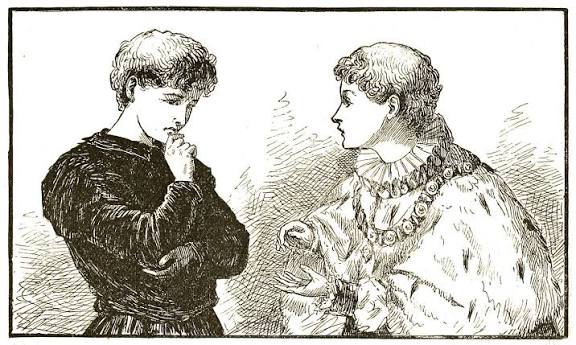
I listed The Prince and the Pauper as my favorite book from 1881 with a very short description: a prince and a poor boy look alike and change places. That is the hook, but the swap is really a test. Mark Twain places Edward Tudor and Tom Canty on opposite sides of Tudor society, then asks what happens when appearance stops matching the social label everyone expects.
The joke depends on people trusting status
Tom and Edward can exchange clothes quickly. Their worlds do not adjust with the same ease.
Once each boy appears in the wrong place, other characters explain away the evidence in front of them. Tom's lack of court knowledge becomes illness or confusion. Edward's insistence that he is the prince sounds absurd because poverty has changed how people read him.
That is where the book's comedy becomes sharper. Authority is partly a performance that other people agree to recognize. Clothing, setting, servants, and expectation can outweigh a person's own account of who he is.
The Mark Twain House overview of the novel centers the two look-alike boys and the exchange between a pauper's child and Edward Tudor. The setup is simple enough for a children's adventure. Twain keeps finding social consequences inside it.
Edward learns what royal decisions look like from below
Edward begins with knowledge of privilege. Outside the palace, he encounters punishment and hardship without the protection that usually surrounds him.
That experience changes the meaning of power. Rules that sound orderly at court can look very different to a person caught under them. The novel uses exaggeration and historical fiction, so I would not treat every incident as a documentary account of Tudor England. The perspective shift still matters.
Edward has to learn that saying “I am the king” carries no force when nobody accepts the premise. He also sees how institutions can hurt people who have little ability to challenge them.
Tom's problem is the reverse
Tom receives comfort and status, but he also inherits expectations he cannot immediately understand. The palace becomes a place where a mistake can attract attention from an entire room.
I enjoy this half of the story because Tom is not written as someone who simply grabs a better life. He notices what he does not know. He learns the routines around him. He also has to decide how to use authority that was never meant for him.
The full novel is available through Project Gutenberg, which makes it easy to compare remembered adaptations with Twain's text. Many screen versions simplify the story into the fun of trading places. The book spends much more time on what each position permits and prevents.
The two boys expose the same system from opposite directions
The Prince and the Pauper was my favorite book from 1881 in the 1889–1880 list, where I called it a classic story. I still think that is true, though “classic” can hide the reason a book remains readable.
Here, the reason is structure. Twain does not lecture for hundreds of pages about class. He puts two nearly identical boys into unequal social positions and lets other people reveal the rules.
That makes identity measurable through consequences. Who gets believed? Who gets punished? Who receives patience? Who can give an order and expect a room to move?
The switch eventually has to end, but it leaves both boys with information they could never gain from their original positions. That is the part I would pay attention to on a reread. The disguise drives the plot. The change in perspective gives the story its staying power.
