
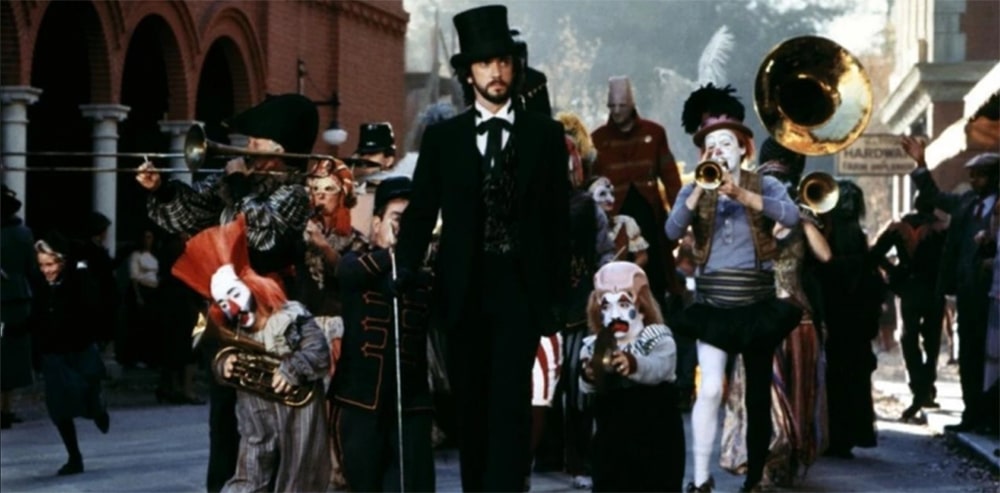
I first mentioned Something Wicked This Way Comes in my 1960s favorite-books list because it was the first Ray Bradbury novel I read and because its child-centered story has an unusual maturity. A reread gives me a different reason to keep thinking about it. The carnival matters less as a collection of creepy attractions than as a machine for offering people exactly the change they already want.
The carnival works because the temptation is personal
Cooger & Dark's Pandemonium Shadow Show arrives in Green Town with spectacle, but Bradbury does not build the story around random scares. The danger becomes specific. Adults and children carry private anxieties about age, courage, family, and the life they think they should have had.
That design gives the supernatural elements weight. A carousel that can alter age is frightening because characters already feel trapped by time. The mirror maze works because self-image is a problem before anyone steps inside it. The fantasy keeps returning to recognizable wants.
The publisher's official description of the novel emphasizes the carnival's promise of dreams and youth regained. That is the useful clue. Mr. Dark rarely needs to invent desire. He exploits what is already there.
Will and Jim make fear move at two speeds
Will Halloway and Jim Nightshade are close friends, yet they do not react to danger the same way. Jim leans toward the forbidden. Will pulls back sooner. Their friendship gives the plot friction without requiring one boy to become sensible and the other foolish.
I like that imbalance because it keeps the book from treating childhood as one emotional state. Curiosity can sit beside fear. Loyalty can survive frustration. A friend can understand why an idea is dangerous and still understand why the other person wants it.
Charles Halloway adds another age to the same problem. His worry about being an older father makes the carnival's obsession with time feel relevant beyond the boys. The result is a story where growing up and growing older become connected pressures.
The title tells us where to look
Bradbury borrowed the title from *Macbeth*. In Act 4, Scene 1, the Second Witch senses Macbeth approaching and says, “Something wicked this way comes.” The Folger Shakespeare Library text puts the line in its original scene.
That connection is more useful than a literary Easter egg. In Shakespeare, the approaching “wicked” figure is Macbeth himself. Bradbury's carnival contains obvious villains, yet his story keeps asking how much power temptation has without a willing response.
The book never reduces that question to blame. Characters are vulnerable because their wishes are human. Still, their choices matter.
The best horror is quieter than the tent
I originally picked the novel among my favorite books from 1969–1960 because of its maturity. I would keep that description, though now I would place it in a more specific spot.
The mature part is Bradbury's refusal to make fear external. The carnival gives fear a body, a schedule, and a place in town. The harder work happens inside people who have to decide what they can accept about themselves.
That is why the novel survives a reread after the carnival imagery is familiar. You already know the carousel is dangerous. You already know Mr. Dark is dangerous. The interesting question becomes which promise would make an otherwise cautious person take one step closer.
For me, that turns Something Wicked This Way Comes from a seasonal horror story into a book about appetite and self-acceptance. The tents leave town. The problem they exposed was there before they arrived.
