
I’ll admit that most of what I knew about early medieval China came from historical dramas. The costumes and palace intrigue stayed with me, but I could never have said when any of it happened. In The Princess Weiyoung, which made my list of favorite Chinese dramas, Feng Xin’er, played by Tiffany Tang, ends up in Northern Wei during the Northern and Southern Dynasties. Since watching it, I’ve wanted to know what that label means.
So I went to encyclopedias and museum sources instead of fan wikis. This is what the real period looked like.
Why the dates differ depending on where you look
The first surprise was that the sources don't agree on the dates. Britannica’s entry on the Southern Dynasties gives 420–589. The Metropolitan Museum of Art’s essay on the Period of the Northern and Southern Dynasties gives 386–581.
Neither one is wrong. They simply start and stop the clock at different events. 386 is the year Northern Wei began, according to Britannica. 420 is when the first southern dynasty of the period, the Liu-Song, took power. At the other end, the Sui dynasty was founded in 581, but Britannica dates the Sui conquest of the south to 589.
Britannica also uses a broader term, the Six Dynasties, for 220–589. That label covers the long stretch from the end of the Han to the Sui conquest of South China. So when a drama says “Northern and Southern Dynasties,” it points to the later part of a longer age of division.
The northern rulers were not Han Chinese
Britannica’s article on the Wei dynasty dates Northern Wei to 386–534/535. It calls Northern Wei the longest-lived and most powerful of the northern dynasties before the Sui and Tang reunification.
According to Britannica, the founders were the Tabgatch, or Tuoba. Britannica describes them as a non-Han people of uncertain origin whose language was basically Turkic. Their first capital was Pingcheng, present-day Datong, near their tribal homeland. They took the ancient name “Wei” after conquering Shanxi, and by 439 they had unified north China.
The Met frames the rulers a little differently. Its essay says North China was under the Tuoba clan of the Xianbei tribe, which it calls a proto-Mongol people. The Met also stresses that the north was politically separated from the southern dynasties but culturally connected with them.
Moving the capital to Luoyang changed the court
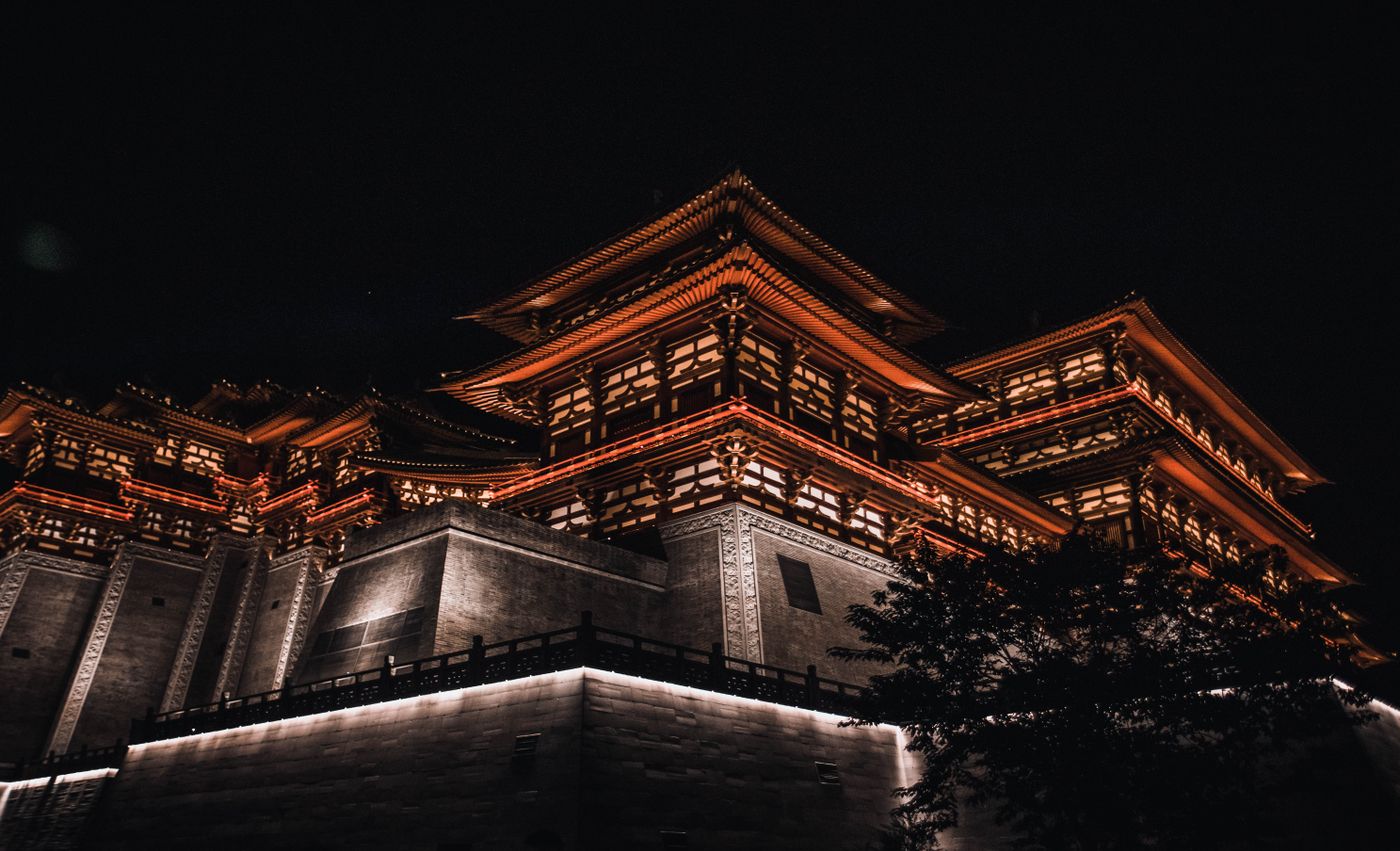
What stood out most was how much the dynasty changed itself. Britannica notes that Northern Wei moved its capital to Luoyang in 495 as part of an active sinicization policy. A land reform in 486 had already made the emperor the owner of all land, with holdings allotted to adult males and reassigned when they died.
The Met names the ruler behind the cultural shift: Emperor Xiaowen, who reigned from 471 to 499. His reforms adopted Chinese language, costume, and political institutions. The Met links them to the artistic and cultural blending that marked sixth-century China.
Buddhism as state policy, and the caves it left behind
Britannica writes that the Wei were major patrons of Buddhism and sponsored it as a state religion, while keeping tight control over the clergy. That support was not constant. A persecution ran from 446 to 452 under Taiwudi, who ruled from 423 to 452, and then ended. Luoyang later became a major Buddhist center.
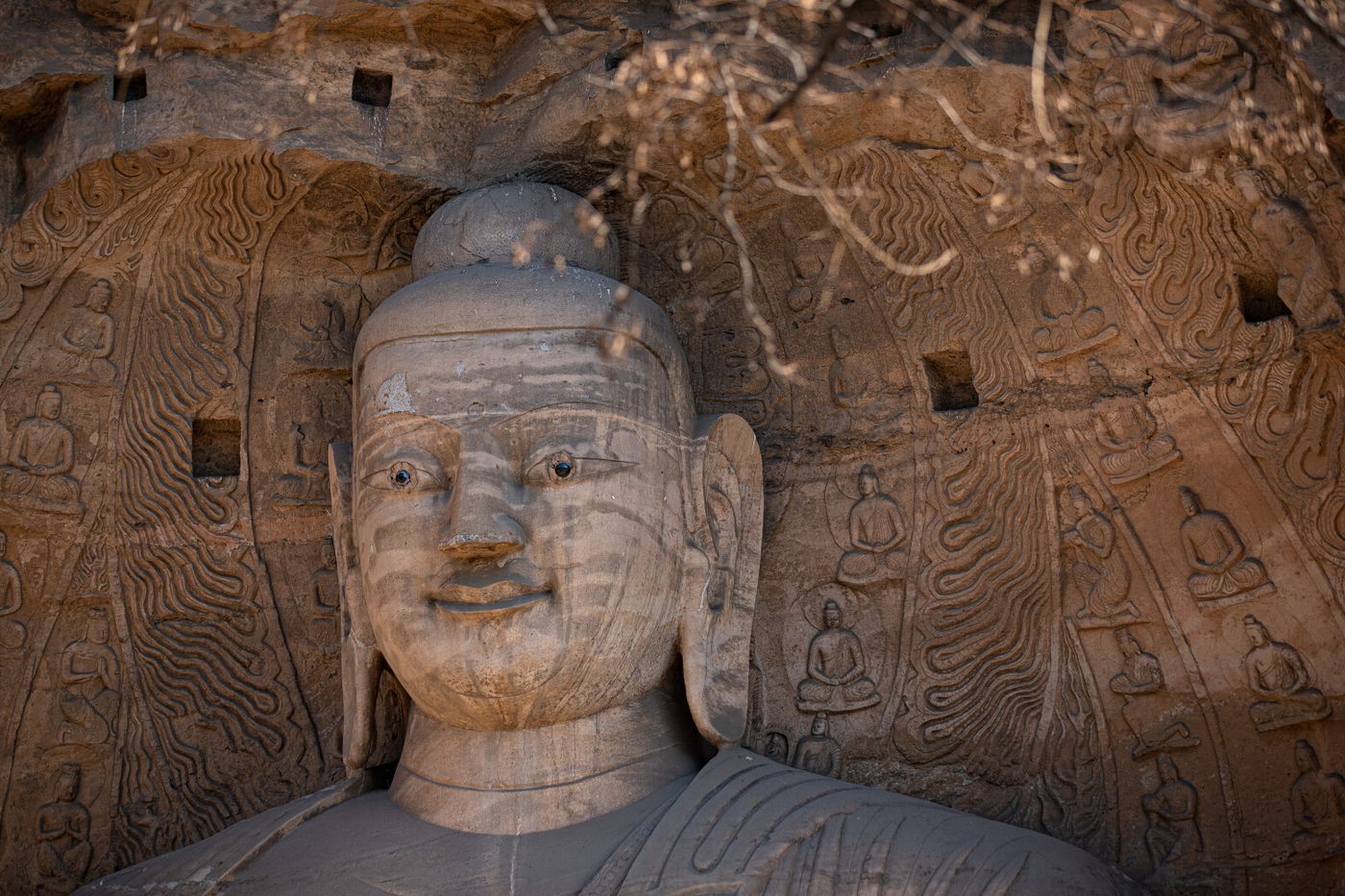
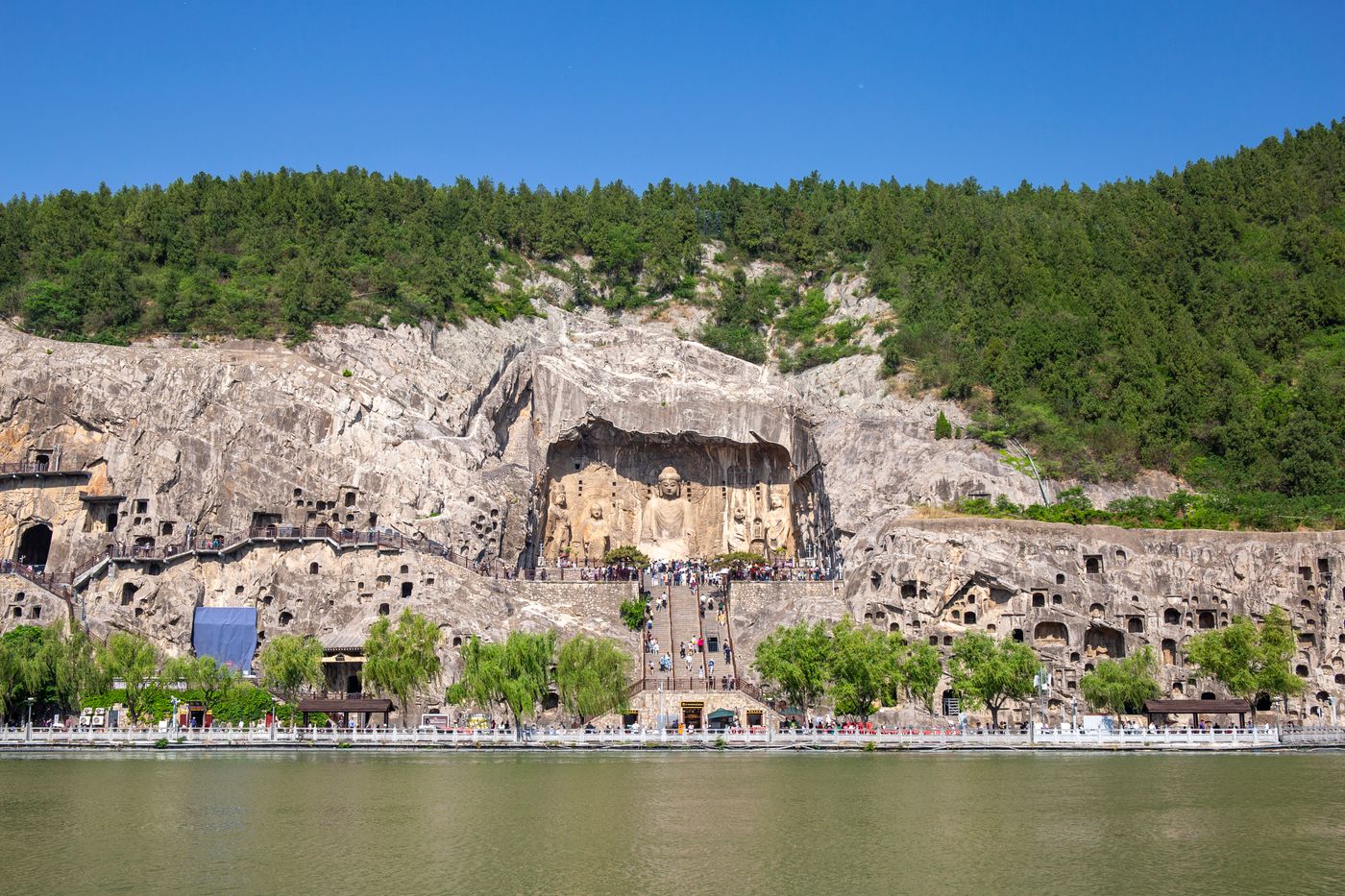
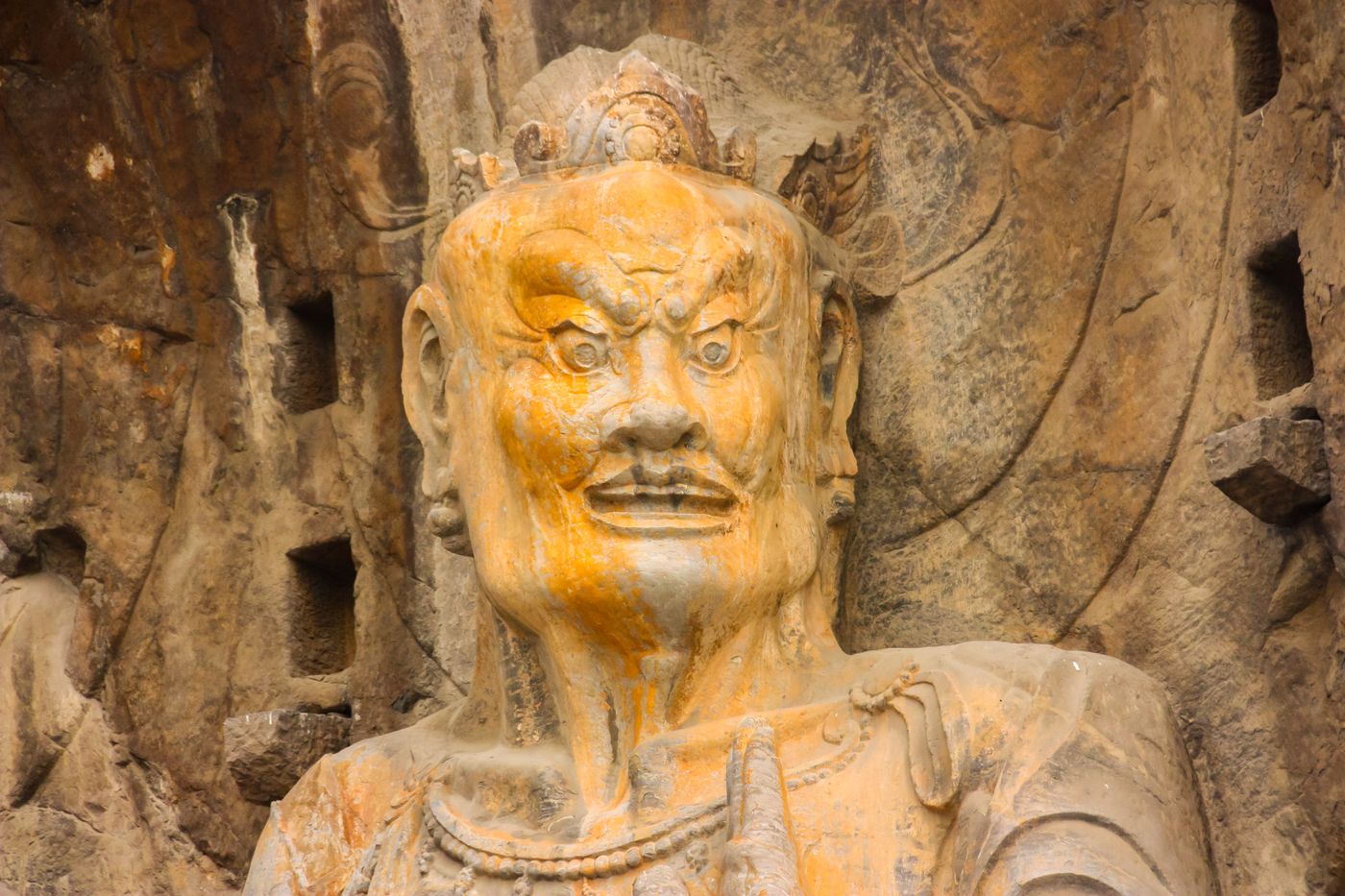
The Met adds that Northern Wei rulers used Buddhism for ideological and social control. The most visible results are carved in stone. The Yungang caves near Datong in present-day Shanxi were made under imperial sponsorship, with sculptures modeled on Indian examples. The Longmen caves in Henan Province reflect the blended style that followed Xiaowen’s reforms.
Four dynasties in the south, one capital
While the north was ruled by one long dynasty and then its successors, the south changed hands more often. Britannica lists the Southern Dynasties as:
- Liu-Song (420–479)
- Southern Qi (479–502)
- Liang (502–557)
- Chen (557–589)
All four ruled from Jiankang, present-day Nanjing, over much of China south of the Yangtze River. Britannica describes the south as politically weak by comparison, but says Chinese culture flourished there. The Met points to Confucian intellectuals taking part in Neo-Daoist debates, and to Buddhist monks spreading ideas that were partly compatible with Daoism.
How the north split and the Sui put China back together
Northern Wei did not last into the end of the period. Britannica describes a military uprising in 523, followed by about ten years of civil war, and the dynasty ended in 534 or 535. The empire then split into Eastern Wei and Western Wei.
Reunification came from the north. According to Britannica’s entry on the Sui, Yang Jian, later known as Wendi, was a senior official of the Northern Zhou dynasty (557–581). When Northern Zhou collapsed, he seized the throne in 581 and took firm control of North China. By the end of the 580s, he ruled a unified China. Britannica’s Six Dynasties entry dates the final conquest of the south to 589, which matches the end of the Chen dynasty.
The Met closes the story the same way: the Sui reunified China (581–618), and the Tang dynasty followed. After watching so many palace dramas set in this world, I now see the real history behind those sets: a capital that moved to Luoyang, a court that chose Chinese institutions, and a north and south that stayed apart for a long time.
